
Thick, Thin, and Cloud
Introduction
As of today, there are 3 types of wireless solutions: non-controller, controller, and cloud based solutions. Regardless of vendor, these three solutions ultimately have the same goal: to provide secure, scalable, and reliable wireless connectivity to endpoints. How these goals are achieved vary from one solution to another as well as differences between vendors.
Since enterprise wireless solutions differs greatly from home WiFi that we are familiar with, it is worth spending part of this article discussing some terminology revolving around enterprise wireless solutions.
Access Points (APs/WAPs) – These are relatively small devices that broadcast wireless signals which allow endpoints like laptops and tablets to connect to to the network. These may function as standalone devices (Thick APs) or may require additional intelligence/instruction from controllers in order to service wireless clients (Thin APs).
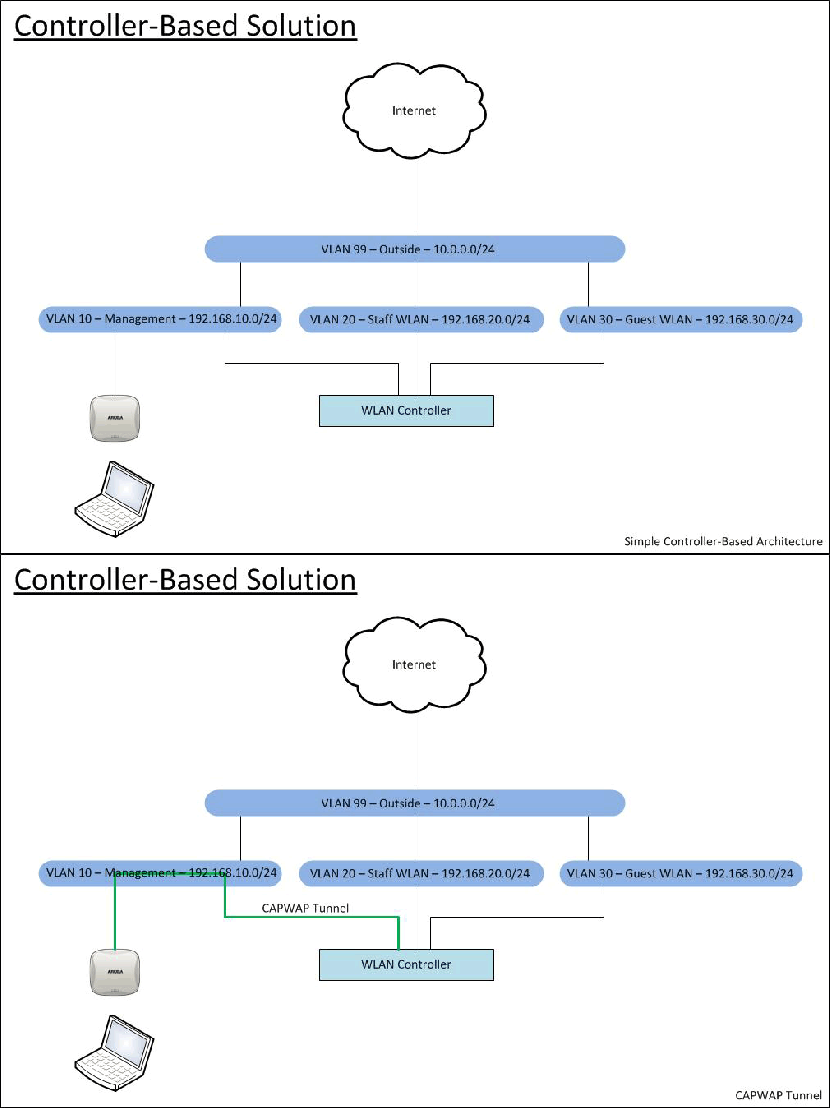
Controllers – These are physical or virtual appliances that function as the brains for thin APs. Since the wireless domain falls under Layer 2 (Data Link) in the OSI model, it is not uncommon for some vendors to regard their controllers as switches. However, instead of using copper (eg. CAT6, CAT6a ethernet) or fiber, the medium for data transportation is the air.
Wireless Local Area Network (WLAN) – Not to be confused with SSIDs, these are simply the classification of networks that wireless clients are able to connect to in order to communicate to other devices (wired or wireless) on the network. Each WLAN is associated with a single VLAN or group of VLANs that is created within the networking infrastructure with Layer2/3 devices.
Service Set Identifier (SSID) – These are unique identifications of WLANs in which wireless clients will see in available wireless networks when attempting to connect.
Basic Service Set Identifier (BSSID) – These are the unique MAC-Addresses that are broadcasted for each WLAN on the APs. These differ from the hardware MAC-Address of the AP and will end in 0 and increment by 1 hexadecimal unit for every WLAN. For example, the BSSID of two different AP’s can be: AP-01 = aaaa.bbbb.ccc0 and AP-02 = 1111.2222.3330 but the actual MAC-Address of two WLANs being broadcasted on these AP’s would be: AP-01 (WLAN1) = aaaa.bbbb.ccc1, AP-01 (WLAN2) = aaaa.bbbb.ccc2, AP-02 (WLAN1) = 1111.2222.3331, and AP-02 (WLAN2) = 1111.222.3332.
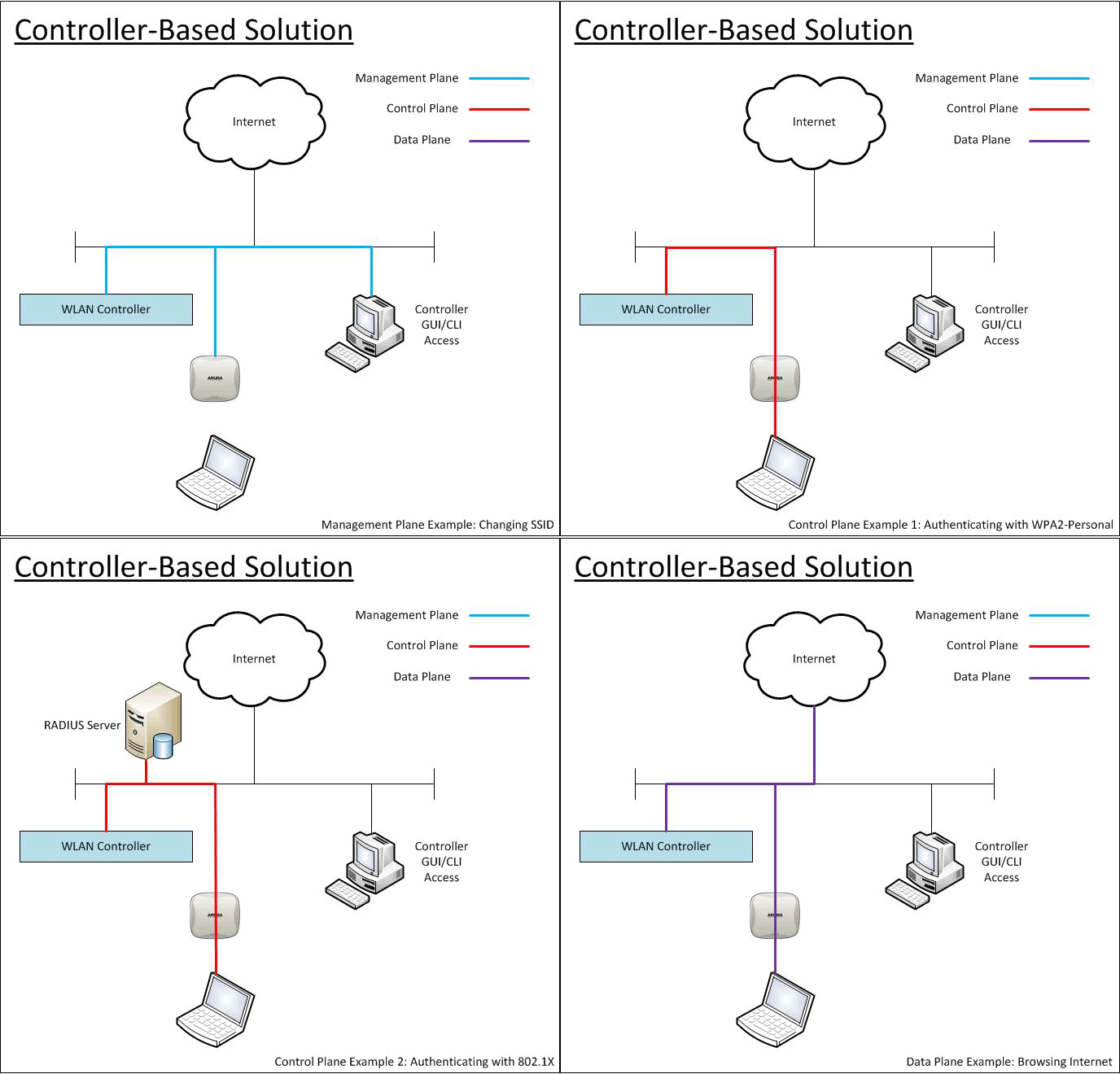
Management Plane* – This is the logical plane where traffic relating to WLAN configurations, software upgrades, and monitoring resides.
Control Plane* – This is the logical plane where traffic relating to authentications, traffic-shaping and QOS resides.
Data Plane* – This is the logical plane where actual traffic from users like web browsing or file transferring resides.
* These are merely examples of traffic that belong to each plane therefore does not represent the entirety of different traffic associated with wireless solutions.
Non-Controller Solutions
Controller-less wireless solution involves utilizing autonomous AP’s to perform the Layer 2 properties that traditional controllers would perform. This means that the AP will typically handle the all the traffic, including management plane and control plane. Technically, cloud managed solutions like Cisco Meraki would fall under Non-Controller Solutions, but it deserves it’s own section that will be discussed later.
Controller-Based Solutions
 Adventures of the IT Noob